4Proptrader-Blog
  • Home
  • About Us
  • Contact Us
  • Our Blog
    • Finance
    • Investment
    • Economics
Author

admin

Trading Tools
Uncategorized

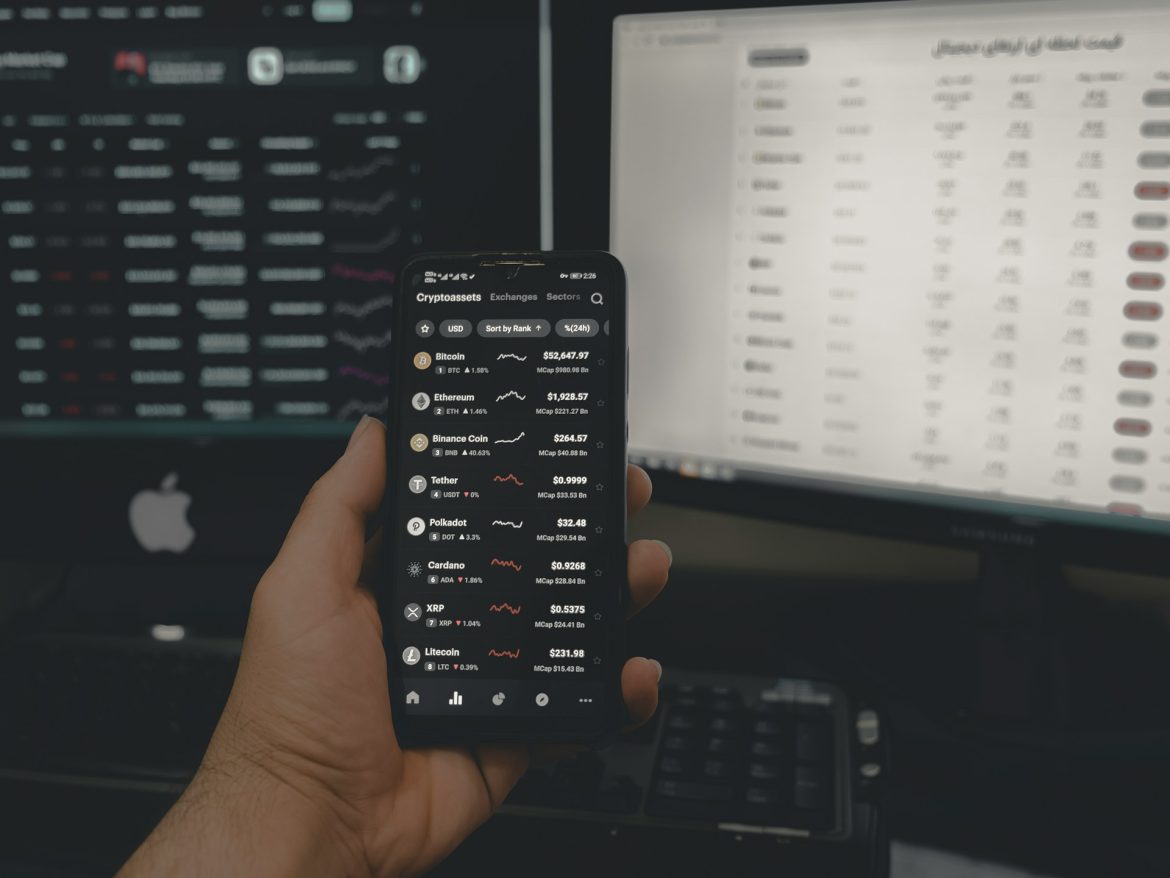
5 Must-Have Tools for Every Successful FX Trader

by admin February 13, 2024
written by admin

Compared to the stock market, the forex market takes the lead since it’s considered the most liquid and largest financial market in the world, with trillions of dollars traded daily, offering budding forex traders an opportunity to generate some profit.

However, it’s very important to note that forex trading is not a walk in the park. Moreover, contrary to what influencers have shown you on TikTok, it’s not the gift that keeps on giving, since more than 85% of traders lose money.

So, it’s important to remember that trading forex is not a holy grail that will make you rich overnight, as it requires a lot of practice, dedication, constant backtesting, and having the right tools, which can play an important role in helping you better analyze the market and make informed trading decisions.

Thus, in this write-up, we will delve deeper into the five tools forex traders should consider adding to their arsenal.

1. Economic Calendar

Traders must have a hold of an economic calendar since it provides excellent insight into upcoming economic data such as the unemployment rate, non-farm payroll, and geopolitical news.

This news event can increase volatility and impact prices, which can make the trading process challenging for uninformed traders.

Staying ahead of the curve in terms of knowing when high-impact news will be released is necessary because it will help you better plan and execute trades. You’ll be saving yourself from a load of pain when other forex traders blow their accounts because of the ripple caused by unexpected market movements.

2. Trading Software

You can have all the forex knowledge, but if you don’t have a platform that will make it easy and convenient for you to execute trades, then it will all be in vain. You must choose a broker that offers user-friendly trading platforms.

The platforms should also provide you with top-notch charting tools and real-time live market data, coupled with the ability to make lightning-fast executions. So, you want to settle for a broker who’s got low latency.

One of the most common trading platforms globally used by forex traders are MetaTrader 5 and MetaTrader 4. It would also be in your best interest to know that these charting tools also provide traders with a wide range of expert advisors and indicators.

3. Risk Management Tools

It’s paramount that traders learn proper risk management if they are to stay in this industry. With forex trading, you want to minimize your losses as much as possible and let profits run.

With that said, you can now see why it’s imperative to have a risk management tool, one common such tool is the stop-loss order, which helps prevent traders from losing more money than anticipated in any given trade.

Forex traders can also employ take-profit orders to lock in their gains. Another secret, that well-informed forex traders keep from the masses is that they always use position-sizing calculators.

4. Technical Analysis Tools

When trading forex, it’s all about stacking the odds in your favor. To successfully do this, it’s essential to possess some knowledge of technical analysis. What do I mean? I mean, you should have some level of understanding when it comes to technical analysis tools like Fibonacci, trend lines, and EMAs.

The reason is, that they’ll help you make informed decisions when it comes to executing trades. Newbie traders can find it quite challenging to identify trend reversals and potential exit and entry levels for their trades. So, they can employ the use of various technical analysis tools.

However, it’s important to remember that, as a trader, you shouldn’t place unwavering trust in a bunch of tools because they are prone to error. Rather, the tools should only act to an end, guiding you through the decision-making process.

5. Trading Plan

If you’re an active reader of this blog, then you might have noticed the level of emphasis I place on trading plans or trading journals. Many forex traders perceive it as child’s play, but journaling one’s trades can significantly boost your performance.

It’s only by reviewing past trades over a period that you’ll start noticing patterns, and before you know it, you’ll be able to successfully search for the same patterns consistently every day.

February 13, 2024 0 comment
0 FacebookTwitterPinterestEmail
eurusd
InvestmentUncategorized

Understanding the Dynamics of EUR/USD: A Comprehensive Guide

by admin February 7, 2024
written by admin

The EUR/USD currency pair also referred to as the “Euro” or “Eurodollar,” is arguably one of the most traded currency pairs in the forex market and is especially a favorite among newbie traders.

Consisting of the United States Dollar and the Euro, the pair represents two of the most powerful economic powerhouses in the world, and in this guide, we are going to delve into the dynamics of trading the EUR/USD currency pair, providing proven strategies and insights for traders.

The Ultimate Guide to Trading EUR/USD Like a Pro

Before delving into the essential concepts and strategies that traders need to consider before trading the EUR/USD pair, it’s crucial to understand the fundamental factors influencing the “Eurodollar.”

6 Fundamental Factors that Influence EUR/USD

– Interest Rates

Central bank policies have an impact on policies set by the Federal Reserve and the European Central Bank. Thus, should there be divergent policies, it can cause shifts in the EUR/USD exchange rate.

– Economic Indicators (GDP)

It’s safe to say that the economic performance of the United States and the European market hugely impacts the pair, and so the positive GDP growth of one region compared to the other could impact the exchange rate.

It’s also worth noting that the unemployment rates of the Eurozone and the United States play an essential role in shaping the sentiment of investors and huge multinationals.

– The Market Sentiment

Risk-Off vs. Risk-On: The USD is considered the currency of the world, and that’s why, during periods of high uncertainty, traders across the Eurozone flock toward the USD since it’s globally considered a stable currency, providing a haven for many investors.

– Political Stability

During periods when there’s political turmoil, investors lose or gain confidence depending on the region, resulting in poor performance of the EURUSD.

– Trade Balances

The exports and imports and the trade balance between the US and Eurozone can impact the exchange rate of the EUR/USD.

EUR/USD Trading Strategies: Navigating Market Dynamics Effectively

– Risk Management

As a trader, I’m sure you know how important it is to effectively manage risk when trading. So, as a trader, it’s important for you to always avoid risking more than you can afford to lose.

Never execute trades without a stop-loss and try as much as possible to spread your eggs. Don’t focus on putting all your eggs in one basket. Diversify your portfolio and spread your risk. That way, when one currency is performing poorly, you’ll have a soft landing if another currency performs better.

At least that way, you won’t end up blowing your account.

– Trend Following

The market is always within a range of 70% of the time and follows a trend 30% of the time. I mention this to bring out the importance of having a good grasp of technical analysis.

If you can spot a trend early, before it progresses too far, then you can hop on and ride the trend until the market begins.

– News Trading

As a trader, I don’t recommend this trading strategy unless you enjoy experiencing an adrenaline rush. I find the news trading strategy specifically risky if you have poor knowledge of risk management because one spike can cast your trading account into the red.

To trade the news, you need to have a very good understanding of various fundamental principles and a little technical analysis to stack the odds in your favor.

– Range Trading

If you have been backtesting the concepts of the support and resistance strategy, then there’s no better way of implementing its use than applying it to trading EUR/USD during its ranging periods.

You’ll want to keep an eye on EUR/USD during the New York and Asian sessions since that is when the liquidity and volatility have died down and the pair is trapped in a range.

Final Remarks: Unveiling the Secrets of EUR/USD Dynamics

The Eurodollar is the most preferred trading currency pair due to its stability and decent volatility compared to a currency pair like GBP/JPY, which is known to have a relatively high level of volatility.

The” Euro” offers traders numerous trading opportunities, especially during the London session. Still, it’s always important to stay ahead of the curve by consistently backtesting the pair and sharpening your trading skills and prowess.

That is how you’ll stay ahead of the curve since more than 86% of traders lose money.

February 7, 2024 0 comment
0 FacebookTwitterPinterestEmail
Forex Trading Strategies
InvestmentUncategorized

The 3 Best Forex Trading Strategies for Consistent Profits

by admin January 24, 2024
written by admin

Are you frustrated and exhausted by making consistent losses every single trading day? Do you have the genuine desire to take your trading skills to the next level and attain financial independence from trading forex?

Well, this write-up will enlighten you on some of the proven trading strategies that traders have used since the onset of the financial markets to extract profits from the forex market consistently.

Due to the dynamic nature of the forex markets, many novice traders can find it daunting and frustrating to trade and get profits from the markets.

There’s always the potential to strike it big with forex trading, but what many forex gurus or experts fail to convey is that more than 80% of traders blow their accounts, especially those dominated by greed and without a proven and backtested forex trading strategy.

Why it’s Important to Have a Forex Trading Strategy

Before delving into the importance of having a proven forex trading strategy, it’s important to mention that traders should have a trading plan covering aspects of risk management, how to manage one’s emotions and the strategy they use when carrying out their technical analysis.

A well-thought-out strategy should clearly outline all the parameters that need to be met for entry and exit points in the market to eliminate guesswork. Otherwise, trading can turn into gambling, which can dent your finances if you don’t have deep pockets.

The Main Forex Trading Strategy Categories

a. ) Scalping

Traders who subscribe to the scalping strategy are focused on making profits from small or micro market movements within short periods, usually on time frames shorter than 15 minutes. However, scalping is not for everyone, as it often requires quick reflexes and decision-making skills.

Pros of the Forex Scalping Strategy

– Increased success rate
– More trading opportunities as opposed to higher time frames, like the four-hour (H4) or daily.
– Reduced exposure to risk

Cons:
– Can be strenuous and exhausting since it requires a lot of fast thinking.
– Highly sensitive to slippage

b. ) Day trading

Like the scalping strategy, day trading also has a fan base and is preferred by forex traders who don’t like operating in a fast-paced environment. Trades are executed within a 30-minute, one-hour, four-hour, or daily timeframe. It often entails opening a position and riding the momentum until the end of the day.

Pros of the Day Trading Forex Strategy
– It has a relatively low risk of exposure.
– Zero rollover expenses
– Reduces opportunity costs because of an account’s liquidity

Cons
– The strategy can be highly sensitive to volatility.

c. ) The Swing Trading Strategy

This is a mid-term forex trading strategy that often rewards patient traders with excellent results. It entails holding a position for more than two to three days and deriving profits from the markets by making note of the swing lows and swing highs.

Pros of the Swing Trading Forex Trading Strategy
– Swing traders don’t have to stress over the short-term volatility because it’s not important.
– Provided you have a solid trading plan and can pick the tops and bottoms with some degree of precision, it’s easy to experience life-changing results.

Cons
– Extra rollover cost

Proven Forex Trading Strategies for Beginners

By now, I’m certain that you have a great understanding of the three main forex trading strategy categories. Now, we are going to explore some of the proven strategy options that you could adapt and implement into your trading arsenal.

However, it’s important to note that these strategies are not impervious to risk. Thus, as a forex trader, it’s your responsibility to exercise sound judgment and implement proper risk management because, as much as the strategies will increase your odds of making profits, there are days when you’ll experience losses.

So, take time to back-test these strategies or get a demo account and use these strategies there for some time before getting a live account.

1. The Support and Resistance Forex Trading Strategy

This is a strategy that produces excellent results when the currency pair that you are trading is ranging. The logic behind the strategy is that the market will turn bearish at a level of resistance and bullish at a level of support.

Many tools, like Fibonacci and Bollinger bands, can also be used to establish support and resistance levels, and traders have the freedom to settle for a tool that they’re comfortable using.

2. The EMA Crossover Trading Strategy

Arguably, it’s one of the most used forex trading indicators and strategies worldwide, and forex traders love using it because it helps them establish a direction bias on any chart at a moment’s glance.

Thus, you can execute trades with some degree of confidence, knowing that the odds are stacked in your favor. Quite often, traders employ EMA crossover strategies of different values (one higher and the other lower) and then enter the market based on the direction of the cross.

One of the most common EMA crossing combos is the 13 and 26 crossover strategy.

3. The London Breakout Forex Trading Strategy

Over the years, many traders have noted that the direction of most forex currency pairs is determined at the London open trading session.

To effectively use this strategy, you should mark the highs and lows of the Asian session and buy when a candle closes above this range or sell when a bearish candle opens below this trading range.

It’s advisable to position your stop loss below the lowest trading range of the Asian trading session during buys and vice versa for sales. Always aim for a 1:2 risk-to-profit ratio.

Important Rules to Bear in Mind When Using Forex Trading Strategies

1. Keep an Updated Trading Journal – Recording all the details of the trades you take daily is the fastest way to improve your trading prowess.

2. Keep Your Emotions in Check – If you want to have a chance at being a consistently profitable forex trader, then you must learn to keep your emotions in check. That’s why it’s advisable to have a detailed plan. Plan the trade, trade the plan, and don’t deviate from it.

3. Set Realistic Profit Targets – Manage your greed, especially when you have had consecutive winning streaks. Also, always remember to check the volatility levels of the currency pair you are trading. The more volatile the currency pair, the higher the profit target you should set.

Conclusion

Forex trading can be a promising and rewarding career if done correctly, and that’s why traders should have a trading plan with well-thought-out, proven, and backtested trading strategies. Don’t choose a strategy based on your friend’s recommendation or what some forex guru who makes money selling courses on YouTube told you.

Rather, you’ll need to choose a plan that fits in with your lifestyle and your personality. Lastly, don’t go in blind with a live trading account without trying the strategy on a demo account over a period.

January 24, 2024 0 comment
0 FacebookTwitterPinterestEmail
How do I start learning forex trading
FinanceInvestment

Forex Trading: A Comprehensive Guide for Beginners

by admin January 23, 2024
written by admin

If you have been dreaming about starting your forex journey, then this write-up will help usher you into the world of financial market trading. You’ll be able to enlighten yourself regarding how to profitably trade forex, the best forex trading strategies, and how to make your first trade.

By the end of this guide, you’ll also be able to pick out the best-performing currency pairs and employ effective strategies that will help you extract profits from the forex markets.

As a beginner, it’s essential to learn how to identify underperforming currencies, since that’s the secret to making money as a forex trader.

How to Get Started with Forex Trading

It’s no secret that the forex market is by far the biggest in the world in terms of trading volume and liquidity. According to estimates, almost $5 trillion is transacted daily.

It’s also worth noting that such huge transactions in the trading world are only possible due to the power of leverage since it allows traders to open bigger positions than they can afford on paper.

However, it’s worth noting that there are risks associated with forex trading. You will likely lose your investment if you fail to exercise poor risk management, thanks to the dynamic nature of the forex markets.

That’s not to say that you won’t be a profitable trader, but it’s crucial to manage your expectations to avoid disappointments.

A Basic Overview of What Forex Trading Entails

For newbie traders who are not conversant with what the Forex abbreviation stands for, well, in layman’s terms, it stands for the foreign exchange market. Once you sink deep into the financial world, it’s also referred to as currency trading, FX trading, or foreign exchange trading.

Unlike stock trading, the foreign exchange market is decentralized, and most transactions are carried over the counter or off the exchange. Retail traders and institutional players participate in trading.

What is Forex Trading for Beginners?

Foreign exchange trading is the process of converting one currency to another. When it comes to the stock market, you exchange money for shares in a corporation, but when it comes to forex trading, you exchange one currency unit for another.

Some of the most commonly traded currencies are the Euro (EUR), the British Pound (GBP), and the American Dollar (USD).

Learning How to Trade Forex for Beginners

To successfully trade in the forex market, you need to understand what the exchange rates represent and how the currencies are quoted.

Features of the Foreign Exchange Market

The main advantage of forex trading is the fact that the markets are open 24 hours a day, 5 days a week, Monday through Friday at midnight. Being able to trade around the clock grants you the flexibility to trade from anywhere in the world, without time constraints.

Most brokers will require a minimum starting balance of $100 to begin trading. Compared to other asset classes like stocks, the cost is far less.

With forex trading, you also don’t experience any slippage as you can open and close trades instantly, which is made possible by the huge trade volume, and the best part is the leverage.
For instance, if your broker offers you 1:100 leverage, it means that for every $1, you can control $100 in the FX market.

Forex Definitions and Basic Terms

Just like it’s important to learn the alphabet of a new language, the same concept also applies to the forex market.

– Exchange Rate – The Quote

The quote is the price at which you can sell or buy one currency for another, and it shows the needed amount to buy one unit of the base currency using the quote currency. Because currencies are quoted in pairs, the value of one currency is always stated relative to another.

– Currency Pair

It’s important to note that forex is quoted in currency pairs, one currency unit against another currency unit, and every currency is abbreviated by three letters, e.g., GBP/USD.

The first currency, which in this case is GBP, is referred to as the base currency, and the second currency, which in this case is USD, is known as the counter currency.

– Pip

The Price Interest Point is abbreviated as PIP and is a common term that’s used in the forex trading world to refer to the slightest price change that can be implemented by a currency exchange rate.

For instance, if the GBP/USD exchange rate is currently at 1.600 and the next day it’s at 1.1590, then it’s safe to say that the exchange rate has increased by 90 pips.

– Spread

In layman’s terms, the bid price is referred to as the difference between the asking price and the selling price and is most impacted by volatility and liquidity.

– Margin

When trading forex, you only need to deposit a small percentage of your current trading size to cover all possible losses, and this is commonly referred to as margin, and all forex brokers will permit you to trade a certain percentage of that margin.

Types of Forex Currency Pairs

The Forex currency pairs can be split into three major categories, as follows:
1. Exotic Currency Pairs: Commonly referred to as minor pairs, these are currencies that are linked to emerging economies like Brazil (Brazilian Real) and South Africa (South African Rand).
2. Major Currency Pairs: These refer to all the currencies like GBP and EUR that are traded against the world’s largest reserve currency, the US Dollar.
3. Minor Currency Pairs: They are also referred to as cross-pairs, and they don’t trade against the US dollar. Some common examples of minor currency pairs are EUR/CHF and EUR/GBP.

Interpreting and Using Forex Orders

Forex orders are commands given to brokers that showcase:
– The type of order
– The buy-and-sell quantity
– Where to exit the market
– Where to take a profit
– The market price to buy or sell
– The direction of your trade (short or long)
– What currency pair to buy or sell

Depending on the market direction, forex orders can be used to do one of two things:
1. Sell (short): If, based on your analysis, you foresee a bearish market, you use the sell order that is triggered at the bid price and closed at the asking price.
2. Buy (Long): If you have analyzed the market and predicted a bullish market, you can use a buy order that is triggered at the ask price and closed at the bid price.

What is the Driving Force Behind the Forex Rate Exchange?

Below are some of the common factors that can affect a currency’s value.

1. The performance of a country’s economy.
The stability of a country’s government
2. Interest Rates
3. Economic data and news reports
4. Forces of Supply and Demand

Final Remarks: How to Trade Forex for Beginners

Similar to the stock exchange market, forex trading operates with the same mechanics of buying low and selling high to generate profits.

However, it’s imperative that, as a trader, you come up with a proper trading plan and exercise excellent risk management to avoid blowing your account since up to 80% of retail traders lose money trading.


January 23, 2024 0 comment
0 FacebookTwitterPinterestEmail
Meta Trader 4
FinanceInvestment

Mastering MetaTrader 4 A Beginner’s Guide to Getting Started

by admin January 19, 2024
written by admin

If you are a novice trader who’s looking to immerse yourself in the world of forex trading, then you must know how to set up and use the MetaTrader 4 trading platform.

With that in mind, I am going to delve into all the tiny, nitty-gritty details of everything there is to know about MetaTrader 4, and hopefully, you’ll be able to gain a deeper understanding of the platform.

What Does the Term MetaTrader 4 Entail?

MetaTrader 4 is a CFD and Forex trading platform that’s used by forex traders to analyze and trade the forex markets. The platform provides traders with effective and advanced tools that they can use in their trading activities in a reliable, secure, and fast environment.

Thanks to its simple yet advanced features and functionalities, it has gained popularity among traders worldwide.

How to set up MetaTrader 4

Whether you want to run MetaTrader 4 on a 64- or 32-bit PC, I’ve got you covered. Let’s delve into how to set up the MetaTrader 4 platform.

– How to Setup Meta Trader 4 on Windows

As opposed to popular belief, it’s easy to download and install MetaTrader 4 on Windows. However, you might have to first identify a suitable broker and either open a demo account or a live-funded account to download MetaTrader 4.

The reason for signing up with a forex broker is because they are responsible for providing traders with access to forex market data. So, in this case, a broker can be considered a middleman who helps traders access trading data from the financial markets.

Once you have completed the sign-up process with your broker of choice and have successfully downloaded the MT4 software, all that’s left is for you to run the.exe file and follow the guided instructions within the installation wizard.

– How to Setup MetaTrader 4 on iPhone

As a trader, sometimes you want to be on the move but still enjoy the convenience of not having to carry your laptop to gain access to the forex market. So, what better way than to install MT4 on your iPhone?

All you’ll need to do is download MetaTrader 4 from the App Store, connect to your broker, and you’re off to the races before you know it.

– How to Setup MetaTrader 4 on Android

Similar to installing MT4 on iOS devices, the same concept applies to Android gadgets. The only difference will be that you’ll be downloading the MetaTrader 4 platform from Google’s Play Store.

– Logging Out of MetaTrader 4

Once you are done trading for the day, you don’t necessarily have to sign out as you would with any other membership website. However, there may be those of you who would prefer not to have your login details saved.

If you fall under that category, ensure that “Save Account Information” is unchecked during your first log-in attempt.

How to Trade with MetaTrader 4

In this section, we are going to explore how to execute trades on the MetaTrader 4 platform.

Firstly, the easiest way to open a trade on MT4 is by using the “Order” window and placing an instant order based on your currency pair of choice. To do this, select your favorite currency pair. There are a ton of options to choose from: EUR/USD, GBP/USD, and the list goes on and on.

Below is a screenshot of an “Order” window for the EUR/USD currency pair. By now, you should be able to see how easy it is to sell and buy with the MetaTrader 4 platform.

To trade at the current market offer, you’d need to choose your lot size (0.01, 0.1, and 1 lots depending on your account balance and your risk management policy) from the “Volume Box,” and then with the “Market Execution” selected as the order type, you can choose to “Sell or Buy” depending on the market trend.

If you don’t want to participate in the market at the current market price, you can use a limit order to buy or sell, as this is the way to anticipate bullish or bearish market phenomena.

How do you Close a Trade on MetaTrader 4?

It goes without saying that once you have executed a trade on MT4, sooner or later you might need to close it, depending on whether you’ll be on a major drawdown. So, how does one exit a trade on MT4?

Well, from the “Terminal window,” choose the “Trade” tab; there you’ll see all the open trades displayed, and by right-clicking on the orders you wish to close, you’ll be able to close trades that aren’t performing as you had analyzed.

Setting up a Stop Loss in the MetaTrader 4 Platform

As evident from the “Order” window in the screenshot below, you should be able to spot the “Take Profit” and “Stop Loss” fields. If you click on the down or up arrow within the “Stop loss” field, the box automatically populates itself with the current live market price.

Frequently Asked Questions

1. Is MT4 (MetaTrader 4) free?

Yes, MetaTrader 4 is free to download and use. All that’s needed from your end is to sign up with a broker, open a demo or live account, and download the trading platform.

2. Is MetaTrader 4 secure and safe?

Yes, MT4 is a trustworthy and secure platform that’s used by thousands of traders worldwide.

January 19, 2024 0 comment
0 FacebookTwitterPinterestEmail
Hankotrade Review
InvestmentUncategorized

Hankotrade Trading Platform: A Complete Review for Investors

by admin January 17, 2024
written by admin

Hankotrade is a straight-through processing (STP) cryptocurrency and forex broker for professional and retail traders. The brokerage is registered in the Comoros Union, with its physical offices located in Business Bay, Dubai, in the United Arab Emirates.

What sets Hankotrade apart from its competitors is the fact that it was founded by a group of experienced financial market traders as opposed to conventional financial experts. Thus, the reason for the platform having exceptional insights into the needle in the flesh for most traders.

Hankotrade’s Compliance with the FSA in the Seychelles

As an aspiring trader who’s considering Hankotrade as a potential broker, I am sure knowing that they are compliant with the Financial Services Authority situated in the Seychelles can help you sleep a bit better at night, knowing that your money is secure.

The broker’s compliance also helps to show prospective forex, cryptocurrency, and indices traders how committed they are to providing a transparent and secure trading environment for all their clients, which in turn has helped build the broker’s credibility scores.

Hankotrade’s 5 Major Competitive Advantages in the Financial Markets

Traders worldwide must choose a trading platform that fits and conforms to their needs, trading personalities, and strategies.

Whether you are an experienced trader who has reaped the benefits of enjoying consistent profits from the forex market or a newbie trader who’s driven to quite the 9-5 daily grind in favor of the nomad lifestyle, it’s essential to pay attention to the features and perks offered by a broker, as they play a crucial role in your trading career.

Below, we will delve into some of the important features that set Hankotrade apart from its competition and why so many traders worldwide are so riled up about the broker.

1. Minimal spreads and commissions

By now, you should know that trading expenses like commissions and spreads eat quite a sizeable chunk of your profits, and that’s where Hankotrade’s commitment to ensuring some of the lowest and most favorable spreads and commissions in the game comes into the limelight.

Of course, when you have such alluring perks, traders will tend to flock to your firm because every trader’s goal is to keep the majority of their profits.

Whether you are a trader who prefers trading indices, cryptocurrencies, commodities, CFDs, or forex, you’ll appreciate Hankotrade’s attractive pricing.

– ECN Account
It’s an account with zero spreads, and their commission charges start at $2 per $100,000 traded.

– ECN Plus Account
A zero-spread account with trade commissions starting at $1 per $100,000 traded.

– STP Account
The account is not devoid of spreads, but compared to most brokers, their spreads beginning at 0.7 pips with $0 commissions seem like a good deal to me.

You’d probably scour the internet for hours on end before finding a broker who would offer such favorable forex trading expenses.

2. Low minimum deposit requirement

For many traders who are just beginning their trading adventure, Access to huge sums of capital isn’t easy to come by, since most traders are just looking to get their feet wet in the trading world, and at the back of their minds, they also don’t want to risk ridiculous sums of money, thanks to the dynamic nature of the financial markets.

That’s where Hankotrade comes in. Their leadership team was aware of this challenge, and that is why they set up to offer one of the lowest minimum deposit requirements in the brokerage industry.

– ECN Plus Account: $1,000
– STP Account: $10
– ECN Account: $100

Can you imagine? It’s mind-blowing. Where do you find a broker who makes it that easy for you to commence your trading journey?

3. Referral bonus

In addition to their ridiculously low deposit requirements and bonus advantage, Hankotrade also rewards those who refer their platform to their social circles. This perk allows traders to earn from their trading prowess and their networking efforts.

Apart from the monetary benefit, it also enables traders to build their social networks, because trading can be a lonely journey. From spending hours backtesting your trading strategies to analyzing the next market moves, one can easily go for days without human interaction.

So, it’s not a bad thing to make some forex trader friends who you can hang out with and enjoy different hobbies with.

4. Excellent customer support

Overall, many companies from various industries underplay the value of stellar customer support.

Well, not Hankotrade. Many brokers love to talk big when it comes to providing their customers with fast and efficient customer service, but Hankotrade has taken it up a notch by ensuring a responsive and proactive approach.

Whether you need assistance with setting up your trading account or need some information about the various trading instruments, Hankotrade’s customer support is available 24/5 to provide swift and accurate responses to all your inquiries.

5. Efficient and fast withdrawals

For most traders, me included, when I am looking to set up shop with a broker, I always end up searching for their customer reviews, specifically how fast their customer response times are and whether they have any challenges when it comes to processing payouts.

Ideally, a green flag for me would be zero complaints because of the withdrawal process. The broker’s payout processing times take precedence over the customer service, but that’s my preference because I don’t like to play with my hard-earned money.

The good news is that Hankotrade has an excellent reputation for having a hassle-free payout process because if you have a positive balance, you can cash out on your profits at any time. Now what better way to leave than to know you can easily and conveniently access your funds at a moment’s notice without being given the runaround?

Final Remarks: Hanko Trade Review

In a nutshell, Hankotrade has come in with a bang and has appealed to many traders globally, thanks to its outstanding features and exceptional withdrawal processes.

Traders who also prefer to rack up their cryptocurrency portfolio have nothing but great things to say because Hankotrade has solidified its place in the industry as one of the few brokers that allow traders to withdraw their profits in cryptocurrency.


January 17, 2024 0 comment
0 FacebookTwitterPinterestEmail
ICT Trading
FinanceInvestment

Navigating the Complexities of ICT Trading: A Beginner’s Handbook

by admin January 15, 2024
written by admin

If you have been in the forex trading field for more than one or two years, then I am certain that you must have stumbled across one of the most widespread forex trading philosophies, which is commonly referred to as the ICT methodology.

For those wondering what ICT means, well, it stands for Inner Circle Trader, and this style of trading mainly focuses on pure price action and is devoid of the widespread common use of expert advisors (EAs).

To help you become more enlightened regarding ICT trading and the techniques used to extract profits from the financial markets, I am going to delve into all the details about the Inner Circle Trading model, and hopefully, you’ll be able to have a better understanding of how you can implement it into your trading strategies.

What is the ICT Concept in Trading?

The ICT trading strategy relies on some essential concepts that every aspiring trader must learn to successfully implement this trading strategy into their style. Below are some of the concepts that you can use to extract profits and trade in liaison with the big banks and market makers.

1. Displacement

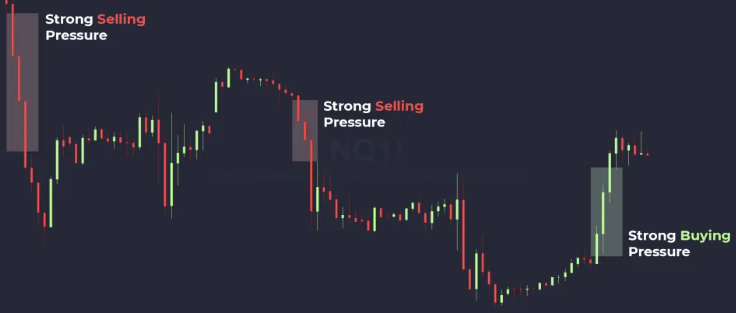
In layman’s terms, displacement refers to a short, powerful burst in price movement that results in buying or selling pressure. You can easily spot a displacement happening in your charts by scanning for single, large candle groups, which may be all bullish or bearish.


Normally, these candles tend to have very large bodies with little to no wicks, which is a strong signal of agreement between sellers and buyers.

It’s also worth noting that displacements often happen after a breach in liquidity zones, which in turn creates a shift in market structure and a fair value gap.

2. Liquidity

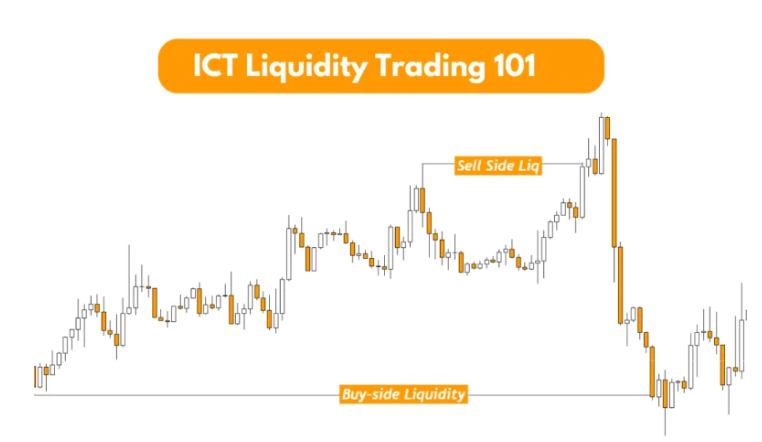
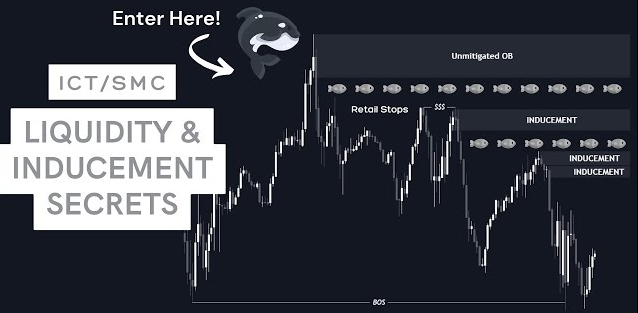
Arguably, liquidity is one of, if not the most important, concepts as far as ICT trading is concerned. Firstly, I want to inform you that there are two types of liquidity, namely, sell-side and buy-side liquidity.

Sell-side liquidity refers to areas on the chart where traders who are looking to go long in the market will position their stop losses. On the other side of the coin, buy-sell liquidity refers to areas on the chart where short-biased traders will position their stop losses in anticipation of a bearish market shift.


You can easily pinpoint the aforementioned areas at the extremes of the bottoms and tops of ranges. Normally, when a market ranges, most traders are eager to exit trades with the least loss or at breakeven, and this is where you are likely to find the most liquidity.

The market makers, or as forex traders like to call them, “smart money,” are aware of this concept, and they’ll accumulate their positions around levels where they know many retail traders have positioned their stop losses.

It’s worth noting that the market trades through an area with many stops; the market will most likely reverse and trade in the opposite directions in its quest to seek liquidity on the opposite end of the spectrum.

3. Shift in Market Structure

I’m sure you have heard the quote that most traders like to say, which states, “Follow the trend; the trend will never betray you.” Well, for novice traders who may not be familiar with identifying trends on a chart, it’s basically when the market is making higher highs and higher lows in an uptrend.


In a downtrend, the market shifts to lower highs and lower lows. An important point to note is that a shift in market structure occurs at the heels of displacements, which we discussed as the first ICT trading concept.

4. Inducement

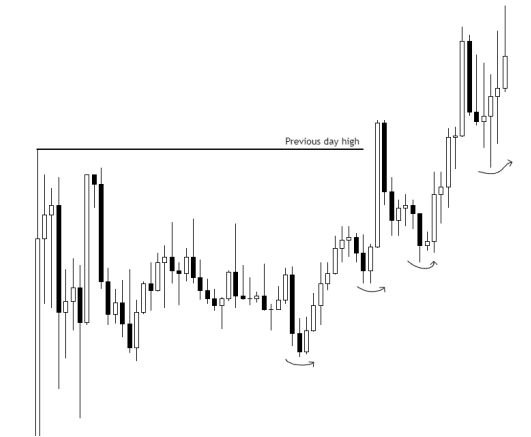
It’s tough for the market to trend in a straight line. Quite often, you’ll notice that when the market is bearish, there will always be countertrends in the bullish direction. These tend to occur when liquidity hunting is taking place in lower time frames.


How does it happen, you may ask? Well, the price will get rejected, and in turn, it will target a short-term low or high before proceeding in the direction of the higher time frames.

Inducement targets these short-term highs and lows because these are most likely the zones where most retail traders have positioned their stops, and as you now know, liquidity hunting happens in zones where there is an influx of stops.

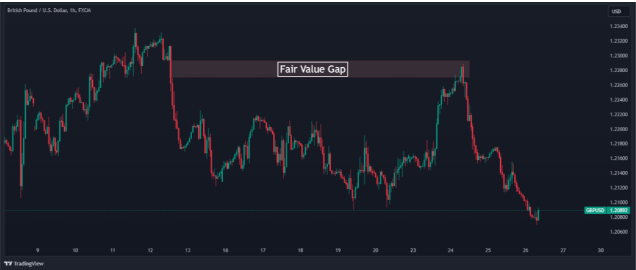
5. The Fair Value Gap

Fair value gaps are created within displacements, and they can be defined as instances within the markets where inefficiencies and imbalances happen. If you are conversant with ICT trading principles, then you know it’s always advisable to identify fair value gaps on the chart.


The reason is, that they act as price magnets, as prices will always seek to rectify imbalances.

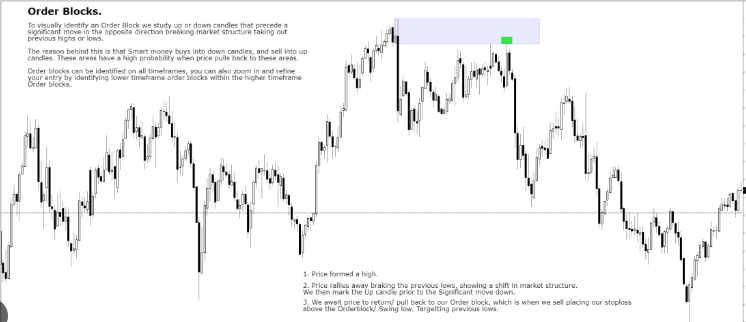
6. Order Blocks

Order blocks are specific price ranges where the big players, such as institutional banks and smart money, have previously placed sell or buy orders. Thus, it’s safe to say that there are clusters of orders around order blocks, which, as a result, impact market sentiment, liquidity, and price movement once price revisits these areas.

Final Remarks and Key Takeaways

Though the ICT trading concepts may seem outlandish and foreign, I’d urge you to try and implement some of them into your trading strategies and styles, because there have been a significant number of traders who have emulated the concepts and reaped significant rewards from the markets.

In the end, expert advisors such as Fibonacci retracement tools and trend identifiers like the moving averages will add to the confusion. Learn to look at raw price action and carry out your analysis without over-depending on indicators, because the very indicators were programmed by man. As the adage goes, “Man is to error.”

January 15, 2024 0 comment
0 FacebookTwitterPinterestEmail
Prop Trading Tips
InvestmentUncategorized

How to Choose the Right Prop Firm for Your Trading Career

by admin January 11, 2024
written by admin


Prop trading, or, in layman’s terms, proprietary trading, refers to the practice where traders are allocated a specific amount of money that they wouldn’t have access to if they went about trading by themselves.

Once traders trade and derive profits from the financial markets, a profit split happens based on the prop firm’s business model.

Over the last few years, this mode of trading has become increasingly popular worldwide, with many aspiring traders choosing to partner with proprietary trading firms as opposed to conventional hedge funds and investment banks.

If you have been thinking about joining forces with a prop trading firm, I implore you to read through this comprehensive guide to help you select the best prop firm that will satisfy your trading requirements.

Selecting a Prop Trading Company: What to Consider

1. Research the Strategies used by the Prop Trading Firm.

No two prop firms are the same; every firm has its own unique set of trading practices, techniques, and strategies.

So, it’s important that you take time to study the FAQ sections and the “Terms of Use” for the different prop firms that you wish to explore to ensure that the trading techniques they use align with yours.

There’s nothing as painful as purchasing an evaluation account only to find that the prop trading firm’s strategies don’t align with yours.

2. Have an Excellent Understanding of your Trading Techniques

Before joining a prop firm, you need to ask yourself a couple of questions, starting with, “Are you a day trader or a long-term trader (swing trading)?” “Do you prefer trading forex or futures markets?”

Asking yourself these questions is essential to helping you narrow down the list of potential prop trading firms that you are willing to consider.

3. Assess the Prop Firm’s Risk Management Policies

If you are a trader, I am certain that by now you know how much inherent risk trading carries. With poor money management, you can blow your account in a matter of seconds.

Thus, when considering prop trading firms to join, you need to be on the lookout for a firm that has implemented practical risk management policies to help protect their capital and ensure the longevity of their traders’ accounts.

4. The Prop Trading Firm’s Capital Allocation

One of the major perks of partnering with a proprietary firm is the opportunity to gain access to huge amounts of trading capital. However, it’s worth noting that different trading firms have different methodologies for allocating their trading capital.

Some may be open to granting access to their funded accounts without the tedious process of taking you through vigorous evaluation faces, while others may require you to undergo up to three evaluation faces before they can give you access to their funded accounts.

Always be honest with your trading experience, and only work with firms that can conform to your trading experience level.

5. Check the Prop Firm’s Reviews

If you are like me, then before subscribing to any service or purchasing any product online, I always check for reviews. The same concept applies to prop trading firms.

Take time to scour the internet with the goal of ascertaining that the firm’s reputation is clean and that they indeed process payouts and deal respectfully with their clients.

Extracting profits from the financial markets is hard. So, the last thing you need is to finally come across some decent profits only to have the prop trading firm start shifting goal posts when you request your payout.

6. Ask about Support and Training Opportunities.

Trading is one of the few skills that, if mastered, can help you compound your money until the day you kick the bucket. So, you want to be part of a team that goes out of their way to educate their traders, since it will help improve your trading skills.

You also want to pay attention to the responsiveness of their customer support team. Imagine having a pressing issue that needs urgent assistance, only to receive a response after days on end. It was not exactly the best experience, if you ask me.

7. Evaluate the Prop Trading Firm’s Fee Structure

To become part of a prop firm, you either must pay a one-time payment or get a monthly subscription that runs monthly. Your account will be debited if you fail to attain the trading targets of the purchased evaluation accounts.

The trade-off is that some prop trading firms will offer prospective traders very enticingly low fees but then demand significantly high profit targets, which becomes challenging for novice traders who are just getting into the game.

8. Be Aware of the Prop Firm’s Profit-Split Policy

It’s common practice for profit sharing to be the norm in prop firms, where traders split their profits with the trading firm based on preset terms and agreements. It’s essential to align yourself with a proprietary trading firm whose profit-sharing policy meets your financial expectations. One last thing: always remember to check whether there are any underlying terms that may inhibit your profit withdrawals from firms that offer high profit splits.

9. Check out the Size of the Prop Trading Firm.

Certainly, a smaller proprietary trading firm can allow you to enjoy tailored and personalized support, which is crucial if you are getting started in the prop trading world. The other side of the coin is that a larger prop firm will offer the best in terms of educational resources and developmental opportunities.

In the end, it all boils down to what you want to achieve out of your prop trading journey. Once you have a clear vision of what you wish to achieve, then choosing an excellent prop firm becomes a breeze.

January 11, 2024 0 comment
0 FacebookTwitterPinterestEmail
prop firm trading
InvestmentUncategorized

Top 7 Benefits of Joining a Prop Firm for Aspiring Traders

by admin January 11, 2024
written by admin

Every trader worldwide dreams of leaving the 9-5 rat race and living the nomad lifestyle, and so they embark on constantly researching trading strategies that will help boost their earnings. Well, what if I told you that joining a prop trading firm could help you achieve your goals sooner?

You see, proprietary trading firms offer excellent benefits to aspiring traders, and you can capitalize on their perks to elevate your trading prowess and soar to greater heights. However, what advantages do they provide? How can they elevate my trading skills?

These might be some of the questions that you may be asking yourself, and in this article, I am going to delve into some of the reasons why you should consider joining a prop trading firm.

How joining a prop trading firm can help improve your trading prowess

1. Expert Mentorship and Guidance

Once you enroll with a prop trading firm, you’re not just signing up for any other organization; rather, you’ll be joining a group of like-minded traders who are solely dedicated to improving their trading skills and increasing their profits.

These long-time professional traders often have a wealth of information and experience, which can come in handy when trying to maneuver the devious labyrinth of the financial trading world.

By being receptive to impacted wisdom from experienced traders, you’ll be setting the stage for success, as you’ll soon realize that you’re making more informed trading decisions thanks to your sharpened skills.

Additionally, most prop trading firms offer community groups either on their website or in Discord, which can help foster a collaborative spirit among traders. This can help improve your trading skills in a short time because you’ll be constantly exchanging trading information and strategies.

2. Access to Capital

I have spoken to quite a few traders ever since I joined the trading industry, and one common complaint I have heard more times than I’d hate to admit is the lack of adequate capital. Prop trading solves this issue by offering traders access to huge sums of their capital.

Meaning traders can trade with larger contracts or lot sizes per trade, which translates to higher profits should the market move in your direction. Otherwise, without such capital backing, traders wouldn’t be able to realize such great profit margins.

3. Access to Advanced Technology

One of the main reasons why you should consider joining a prop trading firm is because they offer unparalleled access to cutting-edge technology that you can use to identify high-probability trading setups while keeping track of your daily drawdown and loss limit.

Some of the tools offered by these proprietary trading firms use complex algorithmic trading software, charting tools, and live market data feeds, which allow traders to execute trades with lightning-fast accuracy and precision.

4. Competitive Trading Commissions

If you take time to do thorough research before committing to join a prop trading firm, You’ll realize that some of the key players in the industry, like 4PropTrader, offer some of the lowest trading commissions of $4 per RT, as opposed to the normal $5 RT rate.

It may seem like child’s play, but high trading commissions per trade can eat into your trading profits in the long run.

If you are a high-volume trader, you want to join a prop trading firm offering low trading commissions and a tight spread. That way, you’ll see a significant bump in your profits over time.

5. Proper Risk Management

As traders, we can all conclude that trading isn’t the easiest way to make money. More than 80% of traders lose money globally daily.

However, prop firms help mitigate the risk of loss thanks to their robust risk management systems, which are put in place to protect both the firm and the trader. Being a trader in a proprietary firm means that you’ll enjoy their risk management strategies, which can help you maximize your gains in the long run.

6. Trading Skills Development Opportunities

All prop trading firms that I have come across are geared toward the development and growth of their traders. Thus, they often go out of their way to grant their traders access to workshops, live training sessions, and seminars to enhance their trading knowledge and skills.

Participating in these training programs can result in a transformation in your trading career, making you part of the 15–20% of consistently profitable traders.

7. Networking Opportunities

Becoming part of a prop firm’s community means that your professional networks will grow, resulting in new partnerships and business opportunities outside of the forex and futures trading industry. Who knows, you might even get lucky to meet your soulmate by engaging in networking events.

Final Remarks

Suppose you are short on finances and have always dreamt of taking your trading game to the next level. In that case, I implore you to consider joining a prop trading firm because it can improve your trading success and overall experience.

From expert guidance from renowned traders to professional training and development materials, prop trading firms provide the resources, tools, and much-needed support to help traders thrive in the increasingly competitive forex markets.

January 11, 2024 0 comment
0 FacebookTwitterPinterestEmail
Forex Vs Stocks
FinanceInvestment

Forex Trading vs. Stock Trading: 4 Key Differences to Know

by admin January 10, 2024
written by admin

The stock market and forex market are arguably the most traded financial markets in the world. This is due to their volatility, historical volume, and the wide variety of educational materials available to both stock and forex traders.

Trading forex and stocks is popular with different types of traders depending on their level of experience, personality type, and the pace of trade execution.

An Overview: Stocks vs. Forex

The forex market is the most liquid and largest financial market in the world, with an endless amount of exotic, minor, and major currency pairs to trade. By using pips, forex traders can conveniently monitor price movements to determine whether the market is bullish or bearish.

The most common currency pairs are GBP/USD, EUR/USD, and USD/JPY, among others.

On the other hand, stock market trading allows stock traders to speculate on the value of penny stocks and blue-chip stocks, which have an opposite original value. Some of the most preferable and advisable shares to trade are from well-established corporations like Apple, Amazon, and Microsoft.

If you are an avid risk-taker who’s looking to cash out big in the future, then penny stocks are your best bet if your speculation is successful.

The differences between stocks and forex

Volume of Assets

Many traders prefer trading forex due to the large availability of tradable assets. The foreign exchange market provides traders with more than 330 currency pairs, with many forex traders leaning toward EUR/USD due to its stability.

The stock market also offers a lot of opportunities to budding traders; however, it doesn’t come close to the forex market’s trade volume of $5 billion daily. You have the option to trade thousands of shares within the pharmaceutical, automotive, and technology industries.

Some of the most common indices, like the S&P 500 and the Dow Jones Index, are traded on the stock market.

Market Trading Hours

Trading hours differ between the stock market and the forex market in that the forex market is open 24 hours a day, 5 days a week, because of the time overlap. This is why the foreign exchange market has an advantage over the stock market.

On the flip side, the stock market operates on a daily set timetable, which is meant to govern the stock trading hours. It’s also worth noting that the timings vary depending on the exchange and the region.

For example, the central forex market operation time is between 08.00 and 16.00, while the London Stock Exchange (LSE) is operational between 08.00 and 16.30, while at the same time being overlapped by the Tokyo and New York sessions. It’s also important to note that within the Asia-Pacific region, some exchanges shut down during lunch hours.

Thus, one can say that the forex market provides great flexibility to traders in terms of trading hours since you can trade from anywhere and at any time in the world since there’s always an operational trading session.

Margin Rates

Leverage trading, also known as margin trading, is an important factor to consider when weighing up the stock market vs. the forex market because it provides traders with better exposure while trading stocks and forex, and it also presents them with a good opportunity to multiply their profits.

However, it’s important to keep in mind that if a trade doesn’t conform to your technical analysis, your losses can also be magnified.

It’s safe to say that the forex market presents a greater risk to traders. So, if you are a trader who’s risk-averse and is looking to preserve their capital over the long haul, then I’d advise you to consider shifting to the stock market because it presents fewer risks and offers traders margin rates of up to 20%.

Trading Strategies

When you compare the strategies that have been formulated for both the stock and forex markets, you’ll quickly realize that the forex market overshadows the stock market when it comes to the wealth of information and resources that have been developed over the years.

Most of the strategies developed are geared toward helping traders make a quick buck, such as scalping, day trading, and swing trading. However, a small percentage of stock market traders employ day trading strategies, which is less common because quite often stock market traders tend to prefer to buy and hold their positions over a long period.

Stocks vs. Forex: Which market is more profitable than the other?

With all factors considered in this write-up, there’s no clear-cut way to determine which market is the most profitable for traders because there are just as profitable stock market traders as there are consistently profitable forex market traders, despite the forex market having a larger daily trading volume.

January 10, 2024 0 comment
0 FacebookTwitterPinterestEmail
Newer Posts
Older Posts

Recent Posts

  • The Role of Sentiment Analysis in Forex Trading
  • Mastering the Art of Risk Management in Forex
  • How to Develop a Winning Forex Trading Strategy: Expert Tips
  • How to Choose the Right Cryptocurrencies for Trading
  • Demystifying Leverage in FX Trading: What You Need to Know 

Recent Comments

No comments to show.

Keep in touch

Facebook Twitter Instagram Linkedin Youtube Email

Recent Posts

  • The Role of Sentiment Analysis in Forex Trading

    April 23, 2024
  • Mastering the Art of Risk Management in Forex

    March 15, 2024
  • How to Develop a Winning Forex Trading Strategy: Expert Tips

    March 12, 2024
  • How to Choose the Right Cryptocurrencies for Trading

    March 11, 2024
  • Demystifying Leverage in FX Trading: What You Need to Know 

    February 27, 2024

Newsletter

Subscribe my Newsletter for new blog posts, tips & new photos. Let's stay updated!

Categories

  • Economics (6)
  • Finance (21)
  • Investment (33)
  • Uncategorized (13)
  • Facebook
  • Twitter
  • Instagram
  • Linkedin

@2023- All Right Reserved. Designed and Developed by 4PropTrader

4Proptrader-Blog
  • Home
  • About Us
  • Contact Us
  • Our Blog
    • Finance
    • Investment
    • Economics